Barns and Bales

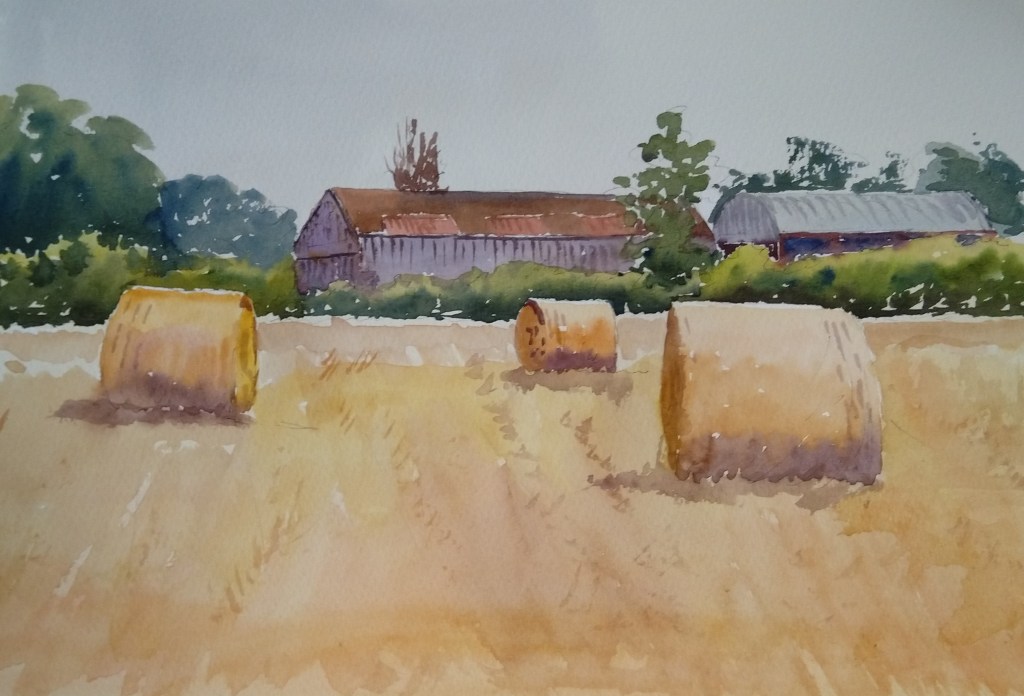
I love painting bales at this time of year. These days they are usually round, although there are still a few rectangular ones if you are prepared to look hard enough. These straw bales were in a field where I have painted them many times over the years, but I always try painting them from a different position in order to change the background a little.
The Plank footbridge

I took a chance with the weather this morning, and followed one of the footpaths across the fields near here. Despite the weather app warning of rain, it amounted to only a couple of drops before moving off elsewhere. It was lovely to be out again. There were plenty of bugs around, but they were far too interested in the thistles and other wild flowers to bother about taking chunks out of me. Being outside with the intention of painting or sketching, doesn’t always mean one has to search for a grand panorama – often it is the small snatched view through a gateway or among some trees, or as in this case, a simple plank walkway from one field to another can capture the interest, and will forever be a reminder of a pleasant walk in a lull before the next downpour.

Carmarthen morning

A painting from a quick trip to Wales, “Carmarthen morning” 13 x 20 inches. Covered a lot of miles in a short space of time and travelled further west into Wales than I have before. Lucky with the weather, most of the rain fell overnight, leaving the days damp but bright.

Spring shadows

We have had some lovely weather recently and it certainly brought people out in their droves, but away from the centre of the village, there were fewer people about. Naturally they wanted to take photos of where they had been – and of themselves – but it is sometimes the less obvious moments which serve to inspire, such as some bare trees by a gate and the pattern of shadows thrown across the road.

A taste of things to come?

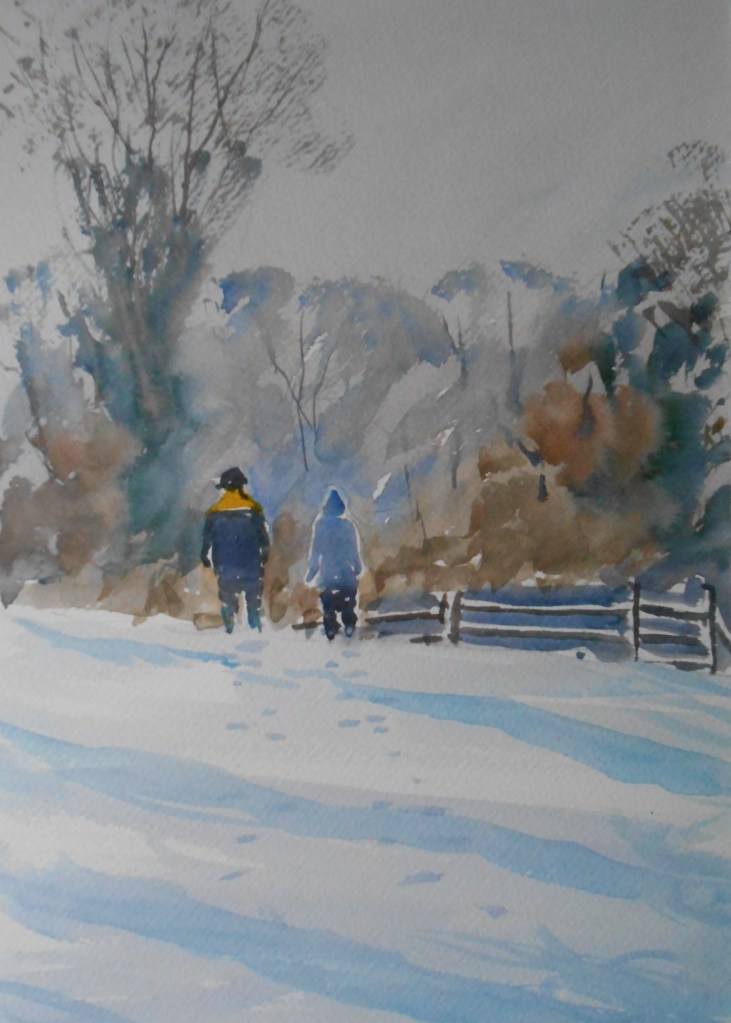
Snow in November – Thanks to Storm Arwen. You either love it or hate it, viewing it as either magical or a threat to life and limb. It’s certainly magical to paint, and in some ways simplifies the landscape into areas of cool blues and violets against areas of warm siennas and ochres with a few slithers of untouched paper.

Of course, the difficulty with watercolours is if the water hasn’t frozen, your fingers probably will, so if you are somewhere where you are unable to sit in a car, it might be a good idea to memorize a simple view or make a pencil sketch to work from when you reach home – alternatively you could just paint the view through the window.

Ice House

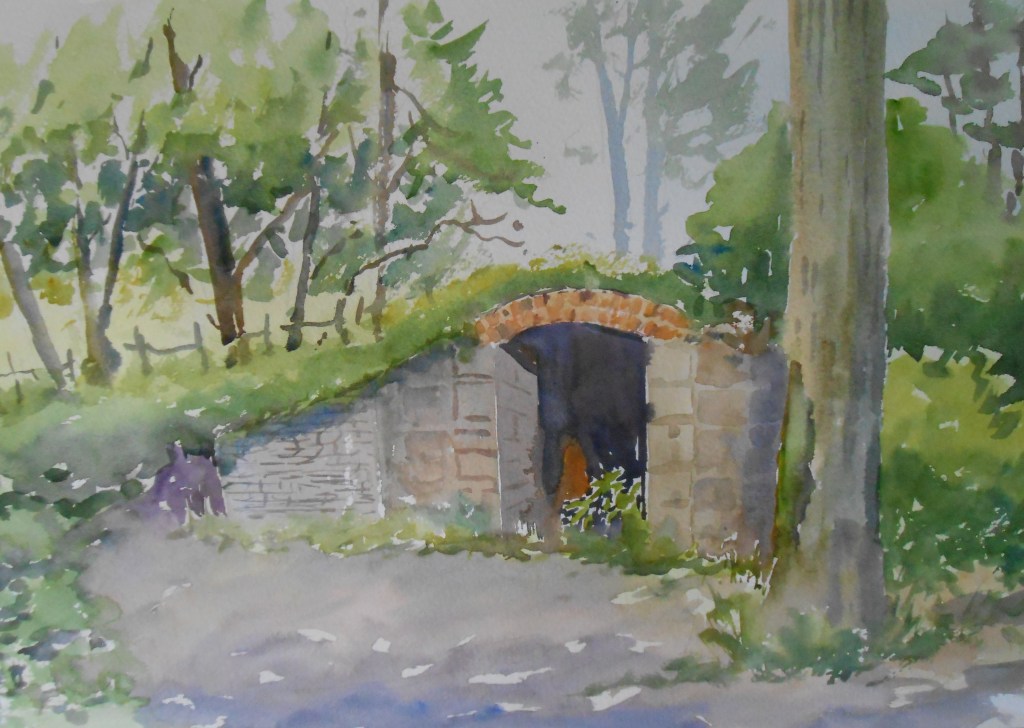
Ice houses were used to store ice in the days before the invention of refrigerators. They were perhaps a status-symbol to impress one’s guests by being able to offer them ice-creams in the summer. Be that as it may, Ice houses have been around for a long time and were often built as underground chambers close to the source of winter ice. Apparently during winter the ice was carved out from the river in rather larger cubes than those we would recognize today, taken to the Ice house and packed with straw as insulation. How it worked I don’t know, but it is said the ice remained frozen for many months.

This one is to be found in woodland on the Sherborne Estate in Gloucestershire, (National Trust property), and is easy to miss on your walk around the grounds if you are not expecting it.

End of the platform.

This is a sketch I did recently while looking around the old railway station at Toddington. There are a whole lot of things going on there and loads to paint, which I hope to do more fully one day, now I know what’s there. Unfortunately I’ve discovered it just as I am in mid preparation for the new term. What I hope to do is to turn this into a larger painting and write more about the location, but it will be a few weeks before I get around to doing it! Just another thing to put on my ‘Places I must paint’ list.

Barn across the field.

It’s looking as if we will be able to hold face to face classes again from next week (for how long remains to be seen). So been busy preparing for the new term which seems to be strange and exciting at the same time.

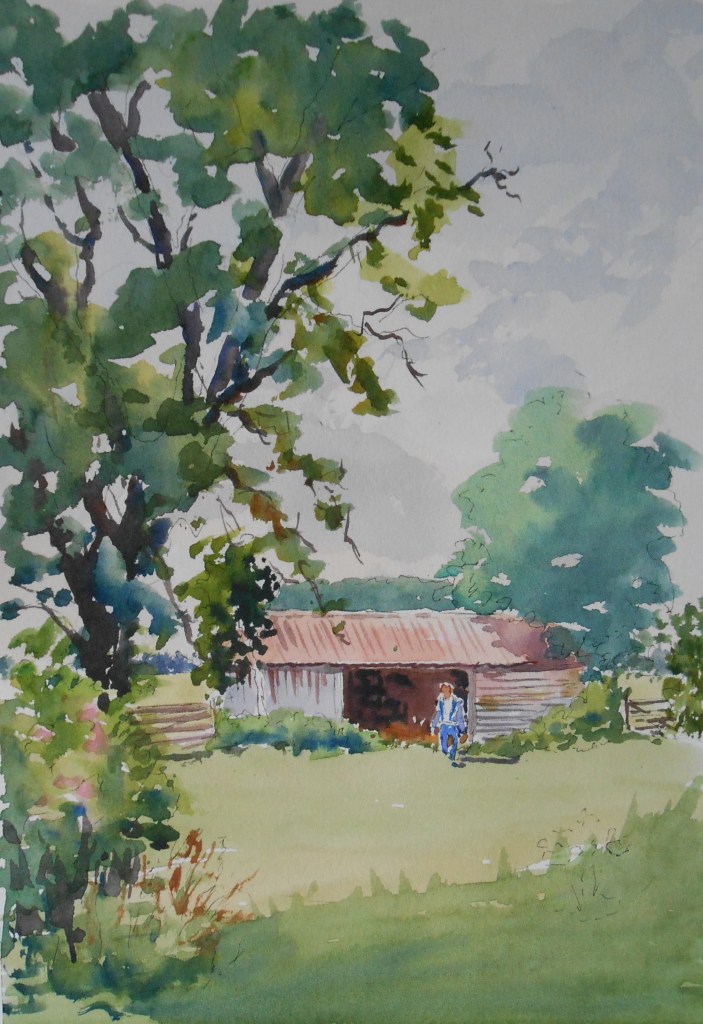
This barn across the field at Sherborne makes use of a limited palette of Quinacridone Gold, Light Red and Cobalt Blue, trying to keep the colours muted under the grey skies we’ve been having for quite a time now.

Down by the barn

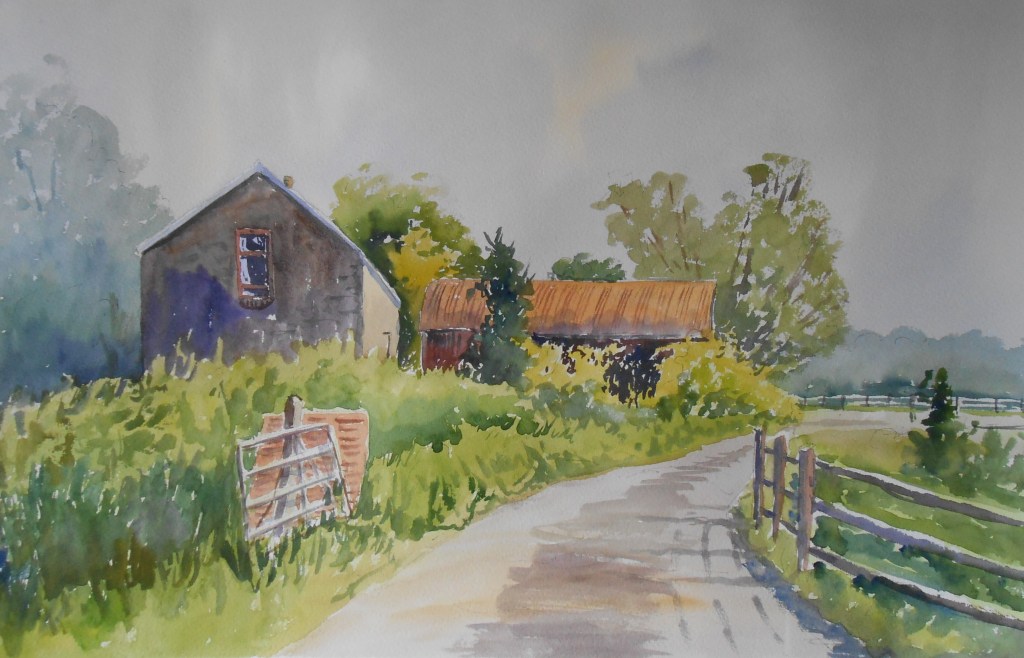
In the middle of the countryside, surrounded by nothing but fields, some with crops, others with cattle. Little noise except the buzzing of insects, (and sometimes the buzzing of far-off chain saws), and every so often a lonely barn, not much used now, since the farming community use machines built for giants. The barns are still an integral part of the landscape and one of my favourite subject matter.